Archives
-

Backstory
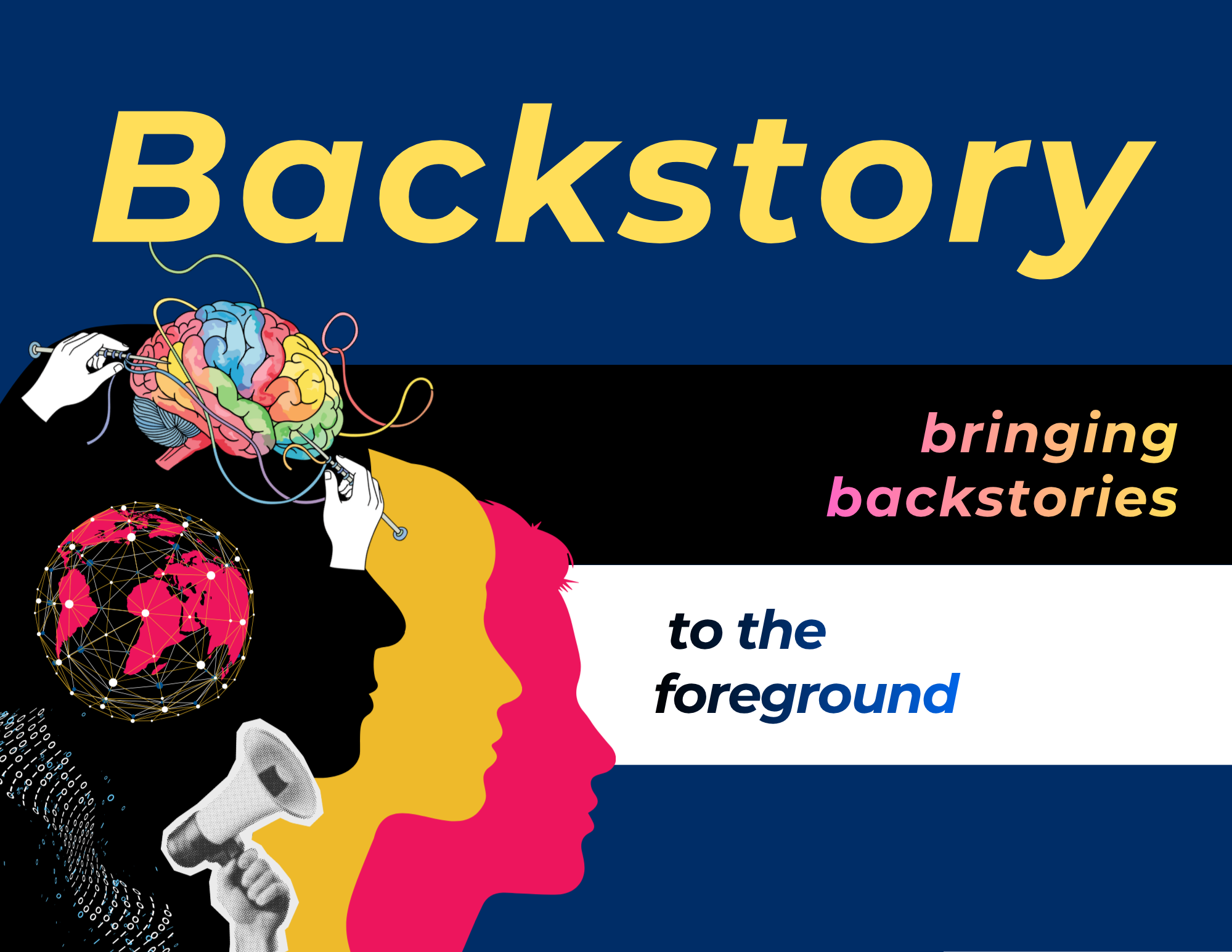
Vol. 1 No. 1 (2025)We are excited to introduce the inaugural issue of Backstory, a student-run, peer reviewed and open access undergraduate research journal showcasing students’ voices and stories. Backstory is a journal that not only centers students’ own backstories and those of others but also recognizes the different strategies and methodologies we might draw on to tell them. Bringing backstories to the foreground, our journal invites stories told in both essay form and across multimodal platforms and technologies, works that bring experimental approaches to research-based writing and interdisciplinary projects that challenge mainstream academic narratives.
Backstory responds to two core provocations: (1) How do we pull our communities, languages, and histories into our writing and research, and (2) how do we engage in cross-disciplinary, culturally grounded knowledge-making that challenges dominant narratives?
This issue presents a range of submissions that address these questions, spanning research essays to multimodal alt-text projects. Together, they capture a tapestry of backstories that weave together overlapping threads, from language, identity formation and belonging, to historical sites and topographies. Backstory also acknowledges the emerging role of technology in shaping our stories, and our Alt-text section reflexively nods to the practice of web accessibility that codes visual information into text, highlighting both the challenges of visibility in all its valences as well as multimodal translation for diverse audiences.
Probing how language and identity co-constitute each other, contributors explore this relationship through a set of distinct viewpoints from racial code-switching in higher education (Garcia), neurodivergent non-verbal masking practices (Shen), to a poetic reclamation of dysfluency through captions (Hilal). Further complicating these language formations, gender is similarly considered through the Alt-text pieces, one exploring the impacts of moralized and gendered language (Muang) and another examining the intersection of multilingualism and non-binary identities (Nova). Students’ home language practices also come into focus, with an ethnography of the Rez accent across generations (Hofstetter) and a study of Appalachian dialect discrimination in higher education (Buckle). But backstories also emerge from places communities inhabit, as contributors excavate these layered histories from urban green spaces (Guiterrez), issues of gentrification and housing displacement (Abernethy), to the role of militourism in the Pacific (Apineru); they also consider how diasporic communities like second generation Cambodians can build new community spaces in higher ed (Pung).
We would like to thank our journal’s advisors Dr. Jennifer Johnson, Dr. Lindsey Felt, and Dr. Harriett Jernigan, and Stanford University’s Program in Writing and Rhetoric (PWR) for their guidance in each submission and dedication in the journal’s direction. Without their support, we would not have been able to produce this issue.
Please join us in celebrating the amazing authors that make up the essence of this first issue and we look forward to shaping our next issue with your (back)stories on display.
With gratitude,
Student Editors of Backstory Journal: Aya Hilal ’25, Alonzo Sexton ’27, and Catherine Wu ’28
-
Backstory
Vol. 2 No. 1 (2026)Backstory is a student-run, peer-reviewed, open-access undergraduate cultural rhetorics journal that centers student voices, communities, and histories as sources of knowledge. It is a space where positionality and scholarly discourse intersect, and context of knowledge creation is as integral to the research process as content. The range of work published in Backstory reflects the diverse modalities and avenues through which cultural and intellectual inquiry take place, encompassing experimental, interdisciplinary, and personally grounded approaches.
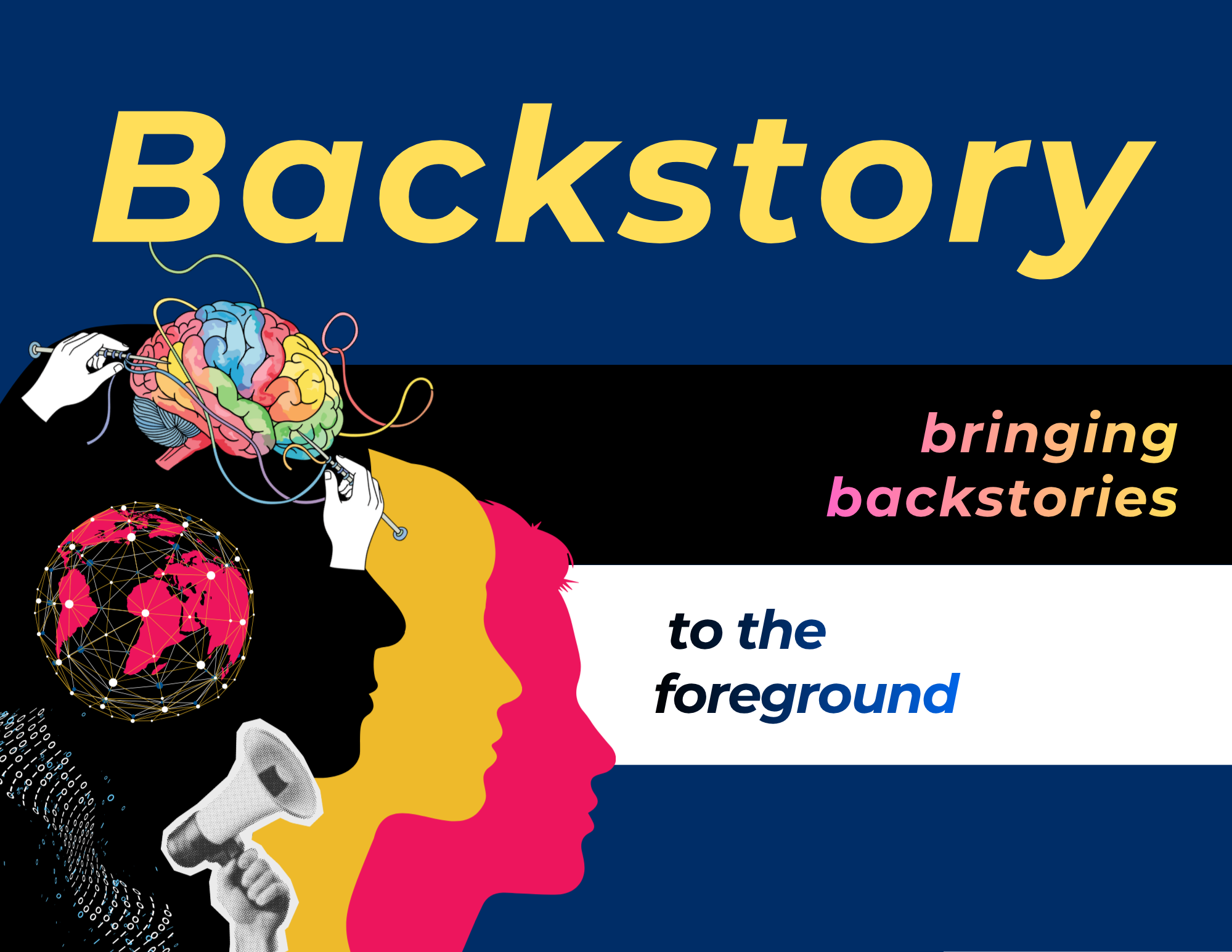
In our second issue, we continue to ask what it means to bring a backstory to the foreground—and find that the answers have only grown more expansive. The contributions below move across continents and centuries, weaving together new geographies, archives, and forms of witnessing. They share a set of urgent questions: What happens when official narratives—national, institutional, and linguistic—fail to hold the complexity of lived experience? Who gets to be recognized, and on whose terms? And what forms of knowledge, resistance, and belonging persist in spaces that dominant structures cannot or will not see?
The contributors of this issue approach these central questions from a range of disciplinary and methodological perspectives. Several examine how colonial and state power operate through systems of classification, sorting people into categories that serve institutional legibility over community legacy and individual needs. Others trace the ecological, cultural, and psychological costs of that sorting and the ways communities absorb, resist, and reject these forms of control. Across the issue, language emerges as a central site of struggle: as a mechanism of exclusion, an instrument of survival, an archive of resistance, and a medium through which identity is both constrained and reclaimed.
We move from the dispossession of Indigenous ecological knowledge in Vietnam’s Central Highlands and the lives of Co Tu women as agents of climate resistance (Le) to the United States asylum system’s structural failure to accommodate Indigenous Latin American migrants who arrive without the legal or linguistic categories it demands (Pacheco). The city, too, becomes a site of contested belonging, as transplant rhetoric in New York reveals how cultural identity is negotiated and defended under conditions of displacement and inequality (Bracey), and accessible policy and infrastructure in contemporary China treat disability as a difference to be erased in the preservation of cultural unity under a collectivist ideology (Wang). Arabic poetry emerges as an archive of witnessing and resistance where official histories fall short (Abdelghne), while AIDS poetry serves as a multifaceted tool for patient relief, destigmatization, and social and political advocacy (Nwosu). This issue’s alt-text section extends these concerns into form itself, as a poem on mixed race identity refuses racial categorization and othering through its poetics, reclaiming the right to complexity (Denney).
We would like to thank our journal’s advisors, Dr. Jennifer Johnson and Dr. Lindsey Felt, and the Program in Writing and Rhetoric (PWR) at Stanford University for their guidance and dedication toward our expanding journal. Their belief and investment in student voices makes this work possible.
Please join us in celebrating the work of the brilliant authors in this issue. We look forward to growing this scholarly and community space with (back)stories still waiting to be told.
With gratitude,
Student Editors of Backstory Journal: Mu Hsi Hsi ’26, Aniyah Shen ’27, and Sienna Hofstetter ’27